
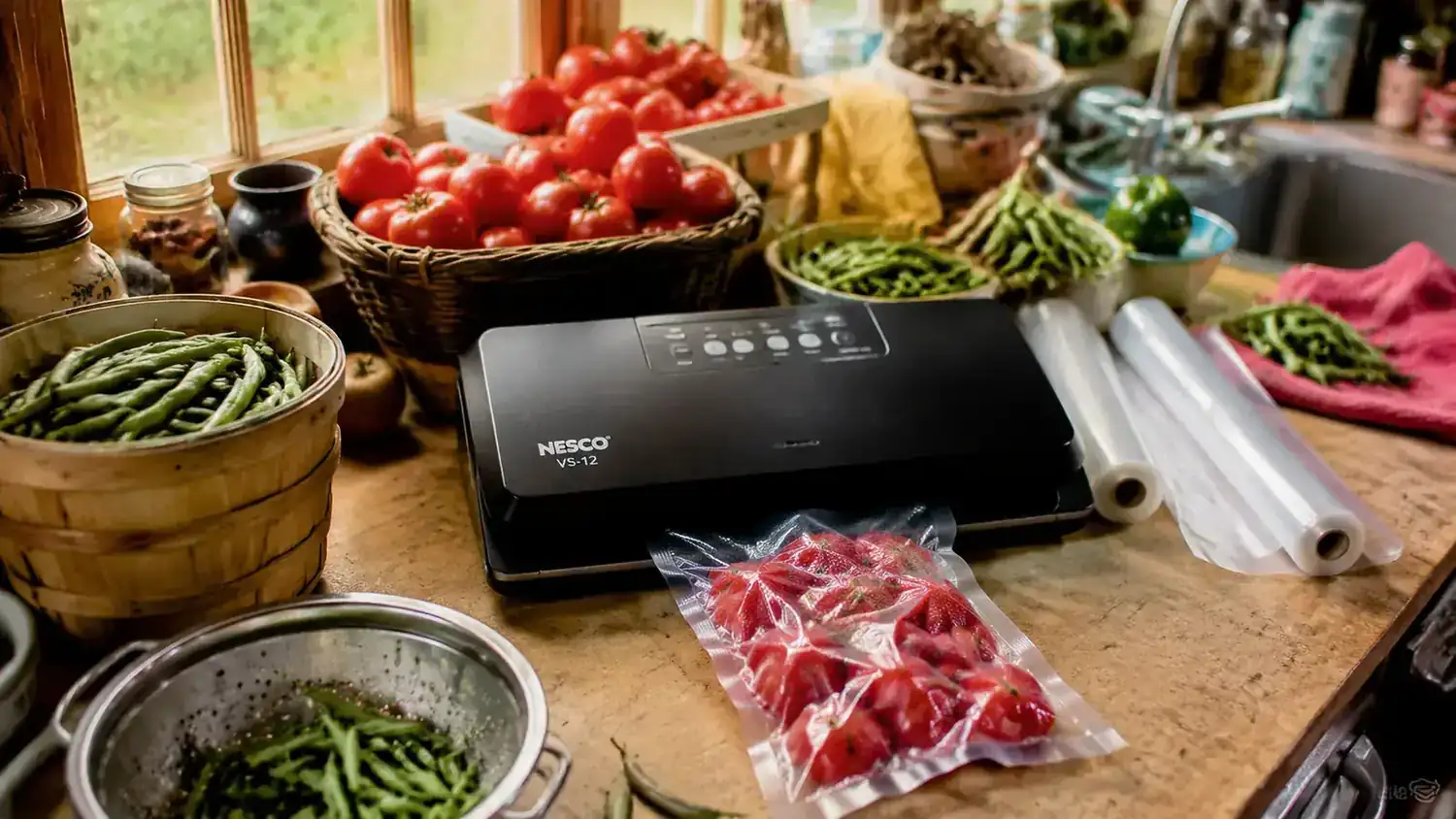
Nobody sponsored this review, which is worth saying up front, because if you search around for a Nesco vacuum sealer review, you will find a lot of them written by people who got the machine for free and felt obligated to say something nice about it. I paid for my Nesco VS-12 with my own card seven months ago, the same week my garden dumped nearly forty pounds of tomatoes and green beans on me in a single weekend, and I have complaints. Real ones. I also still reach for this machine two or three times a week, so hold both of those facts at once while you read the rest of this.
This isn't the review that tells you a sealer is going to transform your kitchen in some sweeping way. It's the review that tells you what actually happens the first time you try to load a bag one-handed while your other hand is sticky with tomato juice, what the motor sounds like at six in the morning before anyone else in the house is awake, and what I wish someone had warned me about before I handed over my card. Nobody did, so I'm doing it now.
The Quick Verdict
A dependable sealer that does its actual job well once you push through a real learning curve, but it's louder and fussier about bag placement than the marketing copy suggests.
Amazon Check Today's Price →Tired of sealers that promise "one-touch simple" and then eat your first five bags figuring it out?
The Nesco VS-12 has a learning curve, but once you're past it, it seals hard and stays sealed. Check today's price on Amazon and read the full breakdown below before you decide.
Amazon Check Today's Price on Amazon →How I Tested It, and What Nobody Prepped Me For
I've recipe-tested professionally for two decades, which mostly means I've developed a healthy suspicion of any gadget that promises to make a kitchen chore effortless. I bought the Nesco VS-12 specifically because I needed to get ahead of a harvest that was outrunning my freezer space, and I figured a machine built for regular, heavy use would hold up better than the small handheld sealers I'd tried in years past for the occasional bag of leftovers.
Over the past seven months I've run it through somewhere around ninety sealing cycles, by my rough count in a kitchen notebook: blanched green beans, quartered tomatoes for sauce, marinated pork shoulder, portioned soup, and more bags of shredded rotisserie chicken than I planned on. That's a real mix of wet, dry, and awkwardly shaped foods, which turned out to matter a lot, because the box copy doesn't tell you that not every food behaves the same way in this machine.
The first two weeks were genuinely frustrating. Nobody warns you that a sealer this capable also comes with an instruction booklet thin enough to skim in ninety seconds, which meant I learned the machine's quirks entirely through trial and error, standing at my counter with a growing pile of half-sealed, wasted bags. That's the part of vacuum sealer reviews that tends to get skipped, so I'm not skipping it here.
The Learning Curve Nobody Mentions in the Five-Star Reviews
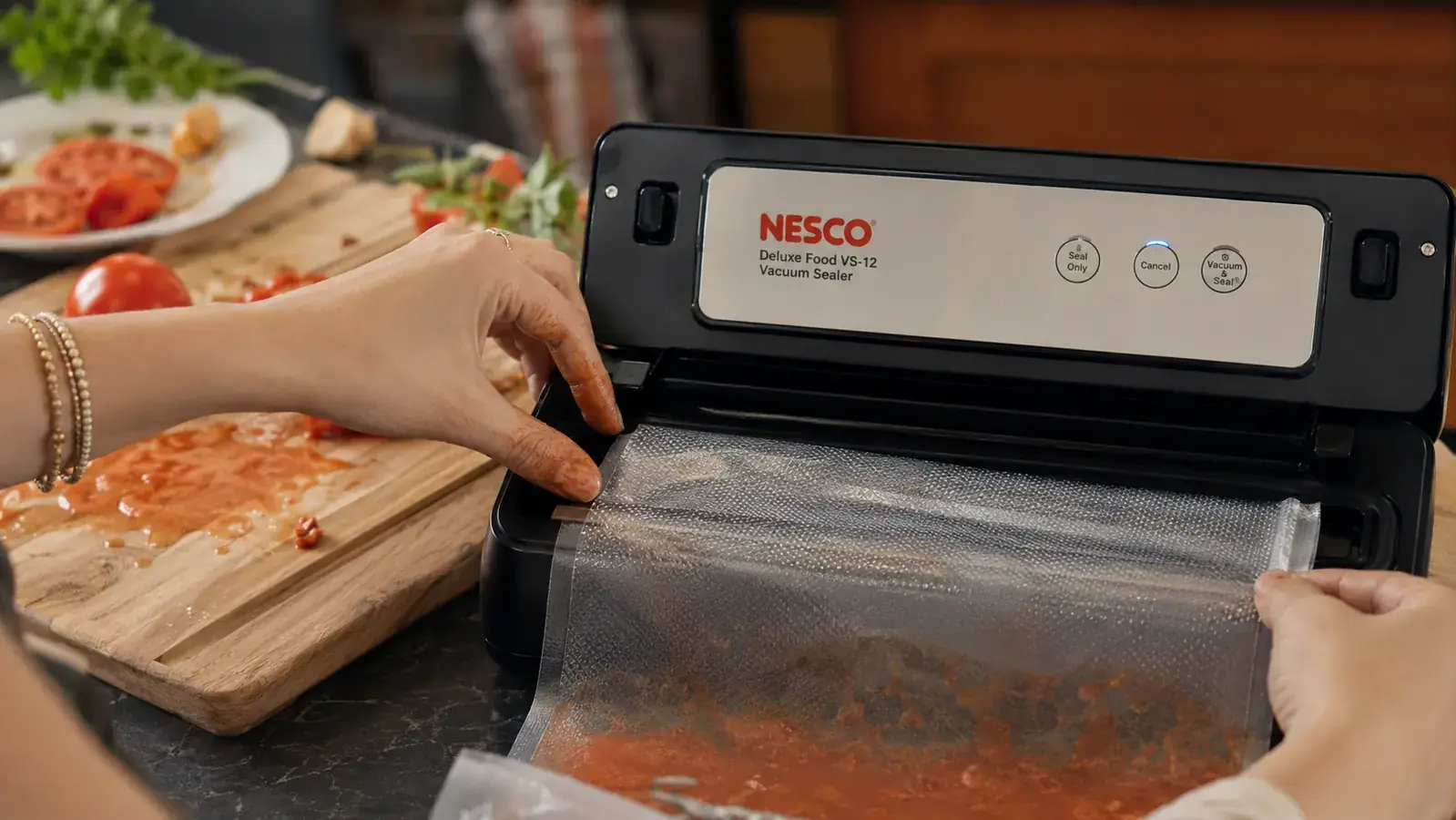
Here's what actually happened the first week: I wasted eleven bags, by count, because I didn't understand how precisely the bag has to sit inside the sealing channel. Off by even a few millimeters, and the machine either won't catch a full seal or it pulls air unevenly, and you don't find out until you've already stacked that bag in the freezer next to a dozen good ones. I only discovered the pattern when three bags in a row came out with a soft corner that never fully sealed.
The other thing nobody mentioned to me: cutting your own bags from the roll sounds simple until you're actually doing it over a sink full of dishes, trying to eyeball the right length for a pound and a half of pork shoulder without wasting three extra inches of plastic every time. I got faster after a couple of weeks, but that early stretch cost me more material than I expected, and more patience than the glossy product photos implied I'd need.
What finally fixed it for me was slowing down and pressing the bag flat against the channel with two fingers before starting the cycle every single time, instead of just laying it in and closing the lid. Once that became habit, my failure rate dropped to nearly nothing. But I want to be honest that it took real repetition to get there. If you're expecting a genuinely foolproof, drop-it-in experience from the first bag, that's not quite what you're buying.
The Noise Is Real, and It's Louder Than the Photos Suggest
I run a lot of my sealing sessions early, before my household wakes up, because it's the only quiet window I get. The Nesco VS-12 put an end to that plan fast. The vacuum draw is a genuine whir, not a hum, and it's loud enough that my dog started barking at it from the next room the first two times I used it. It's not painfully loud, but it is loud enough that I now save my sealing sessions for mid-morning instead, which was an adjustment I didn't expect to have to make.
It's also not a fast machine, which surprised me. A full cycle, vacuum plus seal, runs closer to twenty or thirty seconds depending on how much air the bag is holding, and longer for a bag packed with something bulky like whole green beans. If you're picturing a quick one-second zip like the demo videos sometimes suggest, recalibrate that expectation. It's thorough, not speedy.
What It's Actually Good At, Once You Get Past the Learning Curve
Once I stopped fighting the bag alignment, the results genuinely impressed me. I marinated a batch of chicken thighs for a Tuesday-night dinner using the sealer's vacuum draw to force the marinade into the meat, and in about fifteen minutes it tasted like it had sat overnight in the fridge. I hadn't planned on using it that way, a friend who does sous vide cooking suggested it, and now it's one of the main reasons I still reach for the machine on busy weeknights.
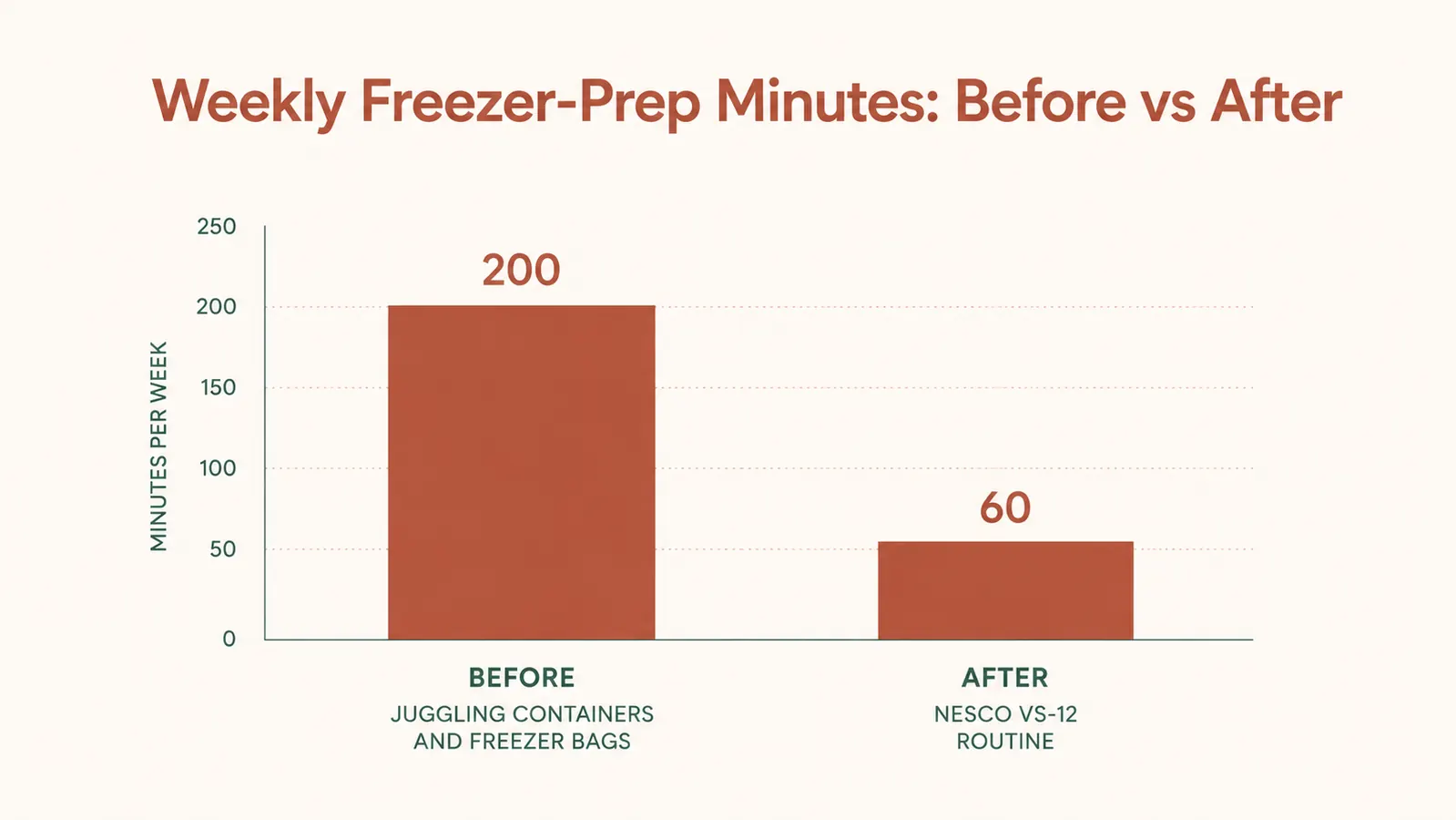
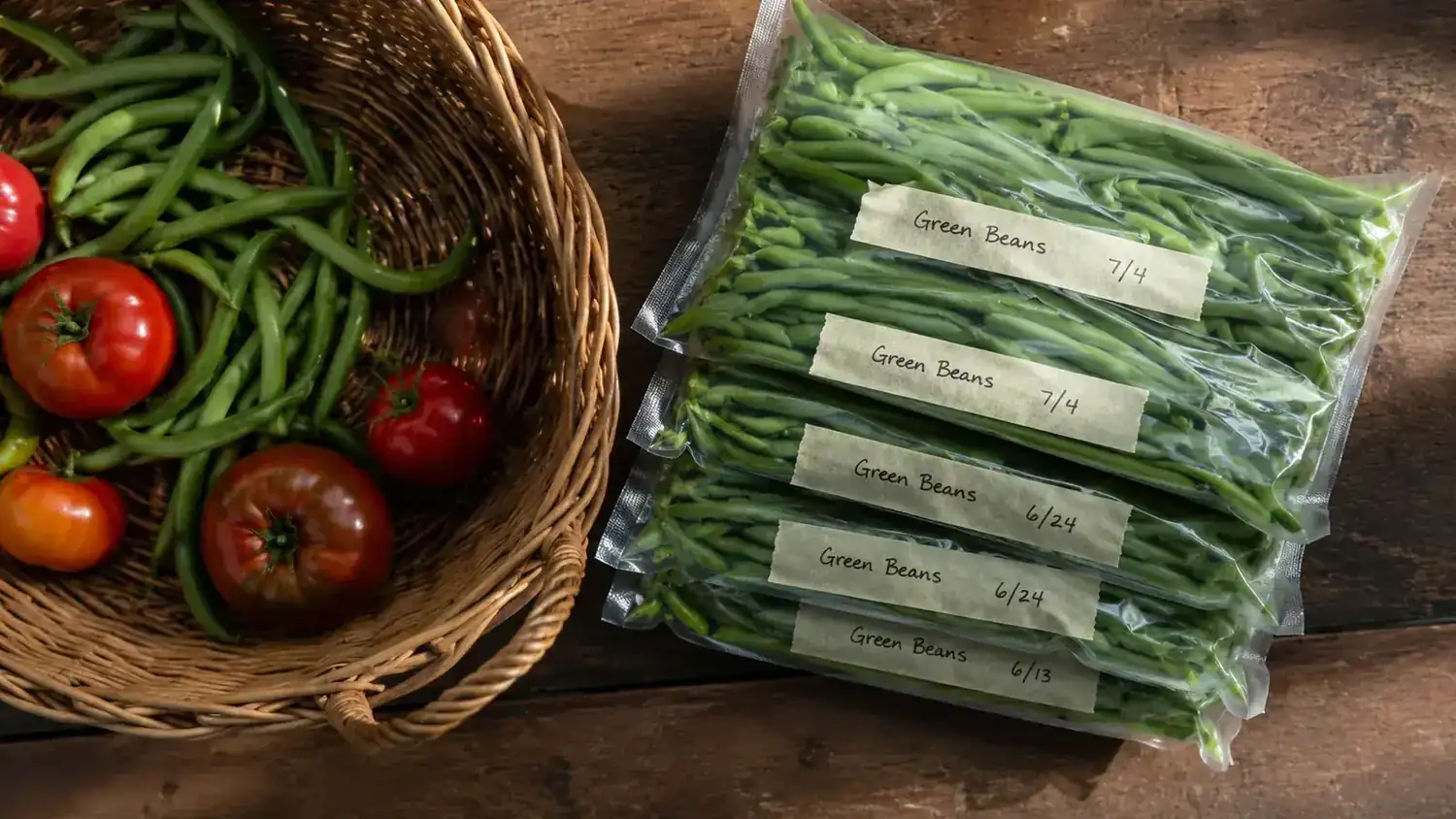
The freezer results have been the real payoff, though. Every bag of blanched green beans and quartered tomato I sealed in September is still sitting in my chest freezer today, flat, stacked, and free of that grayish ice-crystal texture that used to mean a food was done for. I went from tossing a noticeable amount of freezer-burned produce every couple of months to essentially never throwing anything away for that reason. That's the part that makes the earlier frustration feel worth it.
The one pleasant surprise I didn't see coming was the canister attachment. I'd assumed it would sit unused in the box like most bundled accessories do, but I've started running it on my coffee beans and a jar of flour every couple of weeks, mostly to keep pantry moths out of the flour after a bad infestation last spring. It works exactly as advertised for that job, quiet compared to the bag cycle and genuinely simple, no bag alignment to fuss over since there's no bag at all.
The Customer Service Test I Didn't Plan On
About a month in, the machine threw an error light I didn't recognize mid-cycle, right in the middle of sealing a tray of ground turkey I'd been thawing all day. The included booklet had nothing on error codes at all, so I ended up emailing Nesco directly, expecting the kind of runaround that usually comes with small-appliance support. That wasn't my experience. I got a reply within a business day with a straightforward explanation, the code meant the lid hadn't latched fully on one side, and a quick troubleshooting fix that solved it in under a minute.
I wasn't planning to test customer service when I bought this thing, but I'm glad it happened early rather than a year in, because it told me something the spec sheet never could. If the machine does eventually have a real hardware problem down the line, at least I know there's a person on the other end who answers plainly instead of routing you through three layers of chatbots first. That's a small thing that made me trust the purchase more, not less.
The Costs and Annoyances That Add Up After the Sale
Nobody mentions how much drawer space the bag rolls actually take up. I keep two roll widths on hand plus a box of pre-cut bags, and between the three of them, I gave up an entire kitchen drawer I used to use for something else. If your kitchen is already tight on storage, that's worth factoring in before you buy, because the machine itself sits on the counter and the bags need a home somewhere else.
The other annoyance: soft produce doesn't always survive the vacuum draw gracefully. I ruined one bag of fresh raspberries early on because the machine pulled the air out hard enough to crush them flat, and nothing in the manual warned me that delicate produce needs a gentler pulse setting rather than the full automatic cycle. Once I found the manual pulse option, that problem went away, but it took a ruined batch of berries to send me looking for it.
There's also an ongoing cost that's easy to overlook when you're focused on the price of the machine itself. Bags aren't a one-time purchase, and if you're sealing several times a week the way I do, you'll be reordering rolls more often than you'd guess. It's not a dealbreaker, since the rolls aren't expensive per bag, but it's a recurring line item nobody mentions when they're only talking about the machine's price tag.
What I Considered Instead
Before committing to the VS-12, I seriously looked at a smaller handheld sealer, the kind that clips onto a zip-style bag rather than sealing a cut roll. It's quieter and takes up far less space, but it's genuinely not built for the volume I needed during harvest season, and reviews from other home cooks suggested the seals loosen faster in a chest freezer over time. For occasional use it's probably fine. For what I needed, it wasn't close.
I also briefly considered a pricier chamber-style unit after reading about how well it handles liquids without any bag-alignment fuss at all. But the footprint and the price jump were hard to justify for a home kitchen, and I don't seal enough straight liquid, soups aside, to need that level of machine. The VS-12 sits in a reasonable middle ground: more capable than a handheld, less overbuilt than a chamber sealer.
What I Liked
- Seals hold up in the freezer with genuinely no freezer burn on anything I've sealed correctly
- Marinating with the vacuum draw cuts real time off weeknight cooking
- Manual pulse setting saves delicate produce once you find it and use it
- Handles a wide mix of foods, wet and dry, once bag alignment becomes habit
- Uses standard roll bags rather than a locked-in proprietary cartridge
- Responsive customer service when I actually needed to use it
Where It Falls Short
- Real learning curve in the first couple of weeks, expect to waste some bags
- Louder than the product photos and demo videos suggest
- Slower per cycle than I expected, twenty to thirty seconds is typical
- Bag rolls eat up drawer space that isn't accounted for in the machine's own footprint
- Thin instruction booklet leaves you to discover key settings like manual pulse and error codes on your own
Nobody warns you that a machine this capable also comes with an instruction booklet thin enough to skim in ninety seconds. You learn its quirks the hard way, standing at your counter with a pile of wasted bags.
Who This Is For
If you're dealing with a real volume of food, a garden harvest, bulk meat sales, regular soup batches, and you're willing to spend a couple of weeks getting the technique right, this machine earns its keep. It's also worth it if you cook sous vide or marinate regularly, since the vacuum draw genuinely speeds that process up in a way I didn't expect when I bought it.
It's also a solid pick for anyone who's already been burned by a flimsier sealer that gave out after a season of light use. The build feels sturdier than what I've tried before at a similar price, and once you've learned the machine's specific habits, the actual sealing performance is the part that stops being a variable you have to think about.
Who Should Skip It
If you seal a bag or two a month, or your kitchen has no spare drawer for roll storage, a smaller handheld sealer will likely serve you better with a lot less fuss. And if the idea of wasting bags while you learn the machine's quirks sounds more annoying than it does worthwhile, I'd think twice, because that learning curve is not optional, and I say that as someone who's genuinely glad she pushed through it.
The learning curve is real. So is the freezer burn it stops once you're past it.
If you've read the complaints above and you're still in, check today's price on the Nesco VS-12 and see the current deal on Amazon.
Amazon Check Today's Price on Amazon →