
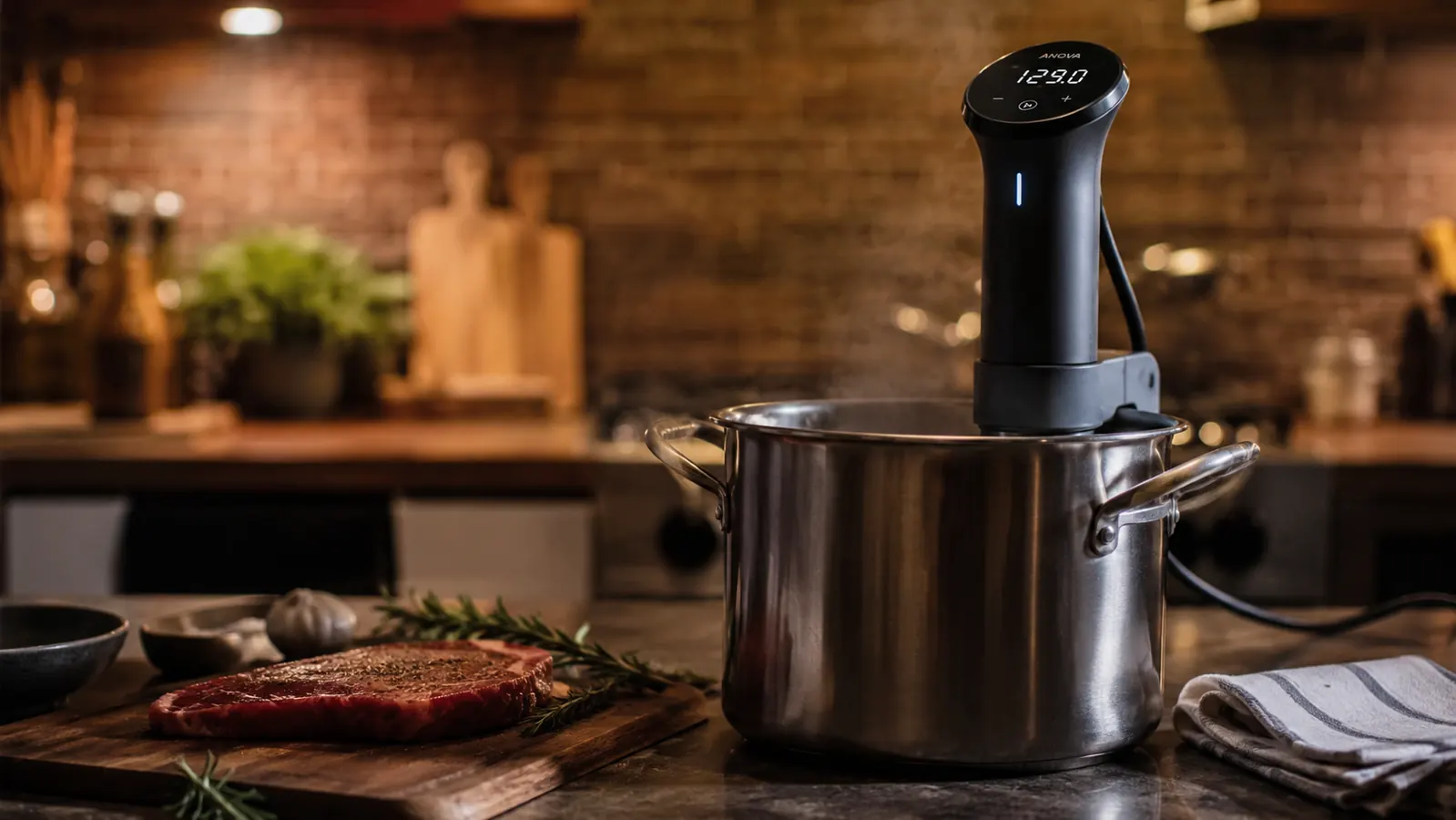
I bought the Anova Precision Cooker 2.0 in March of last year after my third attempt at cooking a bone-in ribeye for my in-laws came out gray at the edges and pink in a lucky pocket near the bone. Twenty years of recipe testing and I still couldn't guarantee a steak. I'd watched other testers in my circle swear by their Anovas for months, so I finally clipped one to a stockpot on my own counter and decided to give it a real year, not a weekend.
That year is up now. I've run this circulator through roughly 140 cooks, everything from a budget chuck roast to a dozen soft eggs on a lazy Sunday, and I've got specific, sometimes unflattering opinions about what it's actually good for. This isn't a spec-sheet review. It's what happened in my kitchen, on my island, with my own timer running.
The Quick Verdict
A genuinely reliable weeknight sous vide circulator that earned a permanent spot in my drawer, with an app that's more useful for silencing beeps than for anything you'd call essential.
Amazon Check Today's Price →Tired of guessing when your steak is actually done?
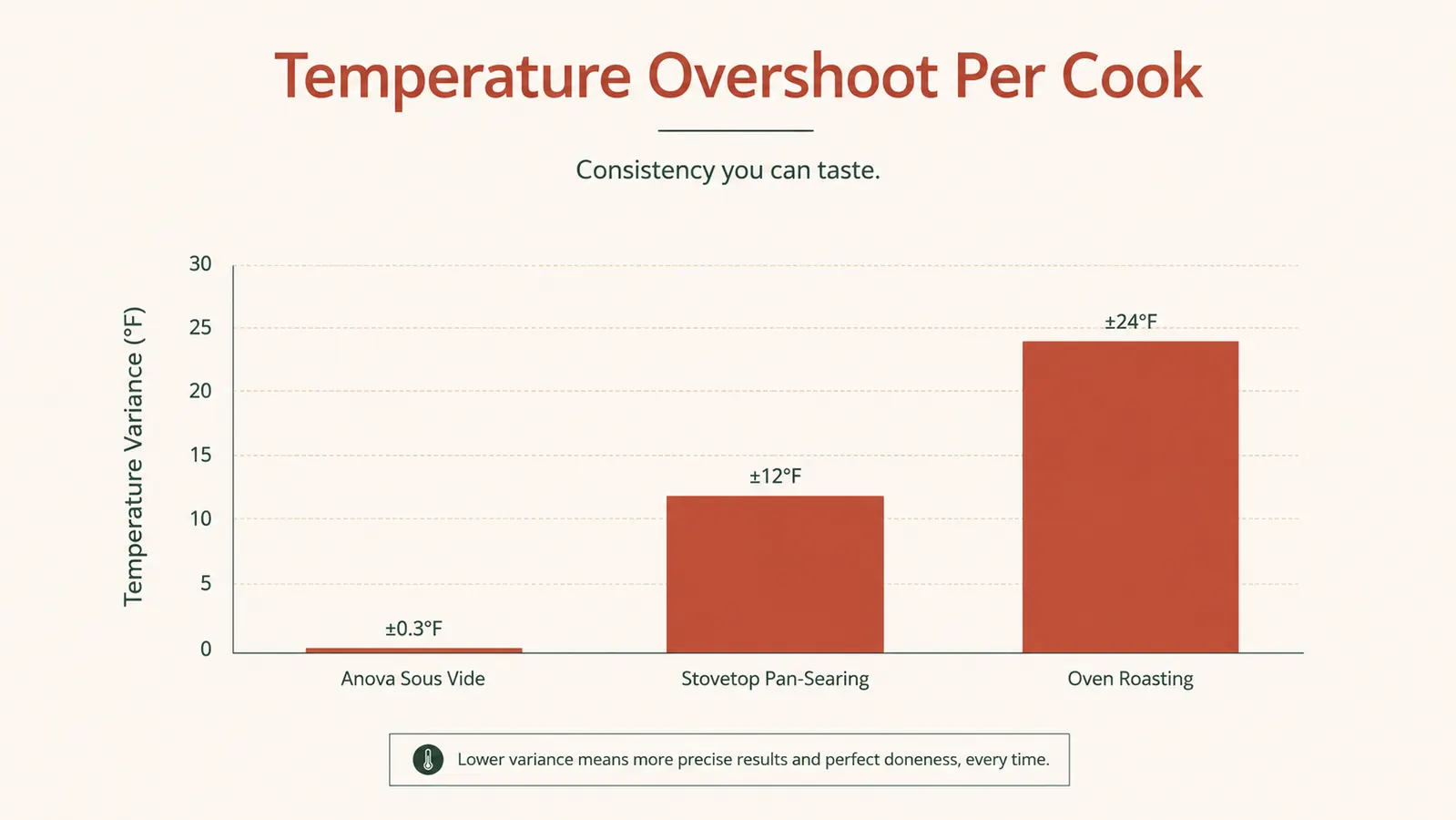
The Anova Precision Cooker 2.0 holds water temperature within a degree, so the guesswork disappears and the timer becomes the only thing you have to watch.
Amazon Check Today's Price on Amazon →How I've Used It
My setup is unglamorous: a 12-quart stockpot, the plastic lid with the cutout for the clamp, and a spot on the counter next to the stove where it lives full-time because I got tired of digging it out of a cabinet. I run it two to four nights a week, more in colder months when I'm doing braises and stews, less in July when nobody in my house wants a hot water bath running for three hours.
The cuts I've put through it most: bone-in ribeye, boneless chicken thighs, pork tenderloin, and a rotating cast of eggs I use for grain bowls. I've also done a few odder projects, infused simple syrups, a batch of yogurt, and one memorable attempt at sous vide carrots that convinced me some vegetables just don't need this machine.
The first thing that changed in my kitchen wasn't the food, it was the schedule. I stopped hovering over a pan for the last five minutes of doneness anxiety. I'd set the bath, walk away, help my daughter with homework, and come back to a piece of meat that was exactly as done as I told it to be. That's the actual selling point, not the technology.
I also learned to keep a small notebook next to the unit, jotting down temperature and time for each cook the way I used to log recipe tests professionally. Six months in, that notebook became my own personal cheat sheet, more useful to me than the app's recipe library because it reflected my exact cuts, my exact bags, and my family's exact preferences rather than a generic recommendation.
The Anova App: Is the WiFi Feature Actually Useful?
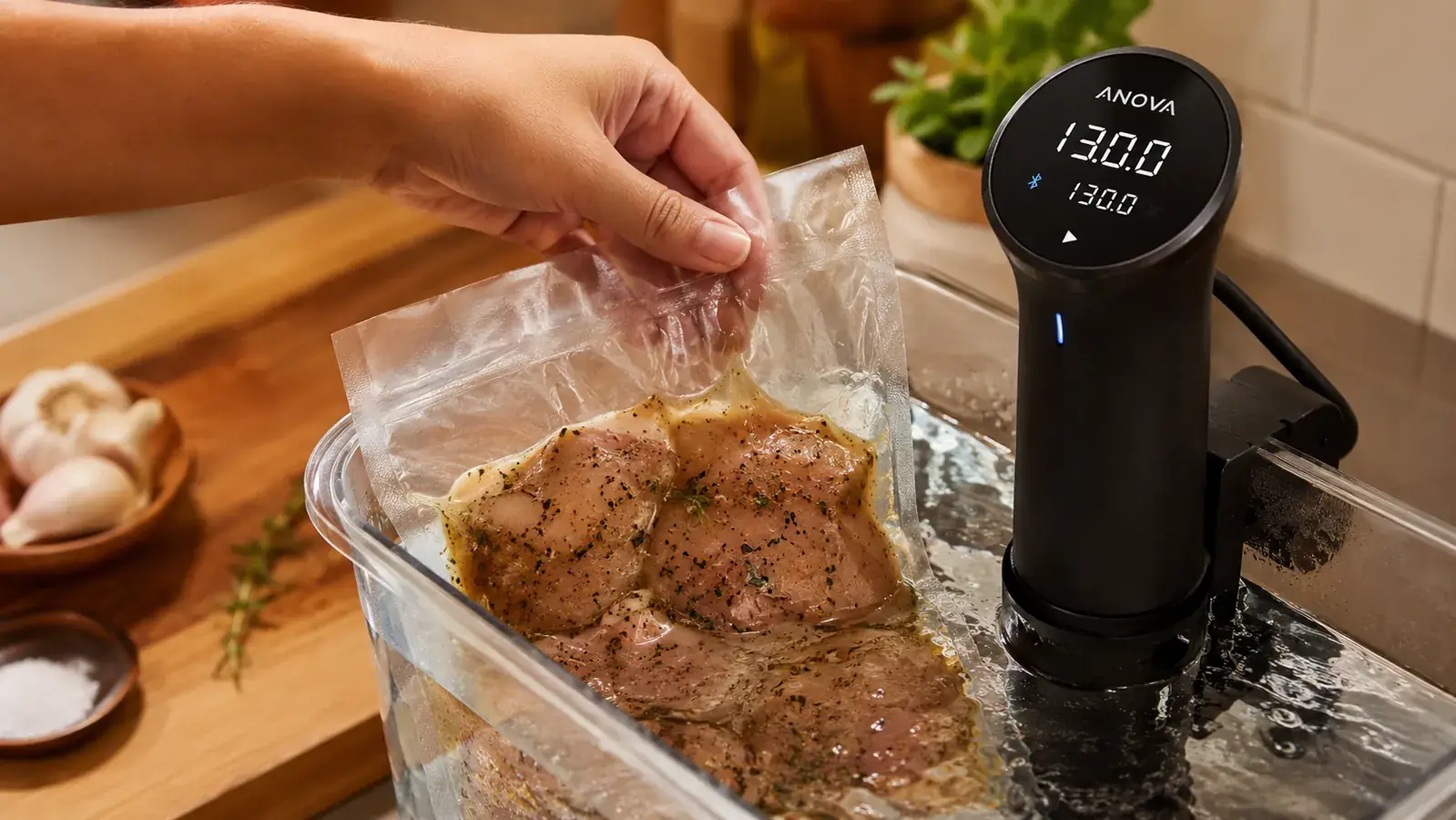
I paired the app the first week and mostly stopped opening it by month three. It's fine. You can start a cook from your phone, get a push notification when the bath hits temperature, and browse a recipe library that leans heavily on Anova's own house recipes. None of that is bad, it's just not load-bearing for how I actually cook.
Where the app earned its keep was on two specific occasions: once when I started a 24-hour short rib cook before leaving for a Saturday farmers market run and wanted to confirm the bath hadn't drifted, and once when my father-in-law was staying with us and I could hand him my phone to check on dinner instead of explaining the physical dial. Convenience, not necessity.
The app also lost its WiFi connection twice over the year, both times during a home router firmware update, and both times the machine kept cooking on its own just fine using the physical controls. I didn't lose a single cook to a software problem. I'd call the app a nice-to-have layered on top of a device that doesn't actually depend on it.
A Year of Steak, Chicken Thighs, and Eggs
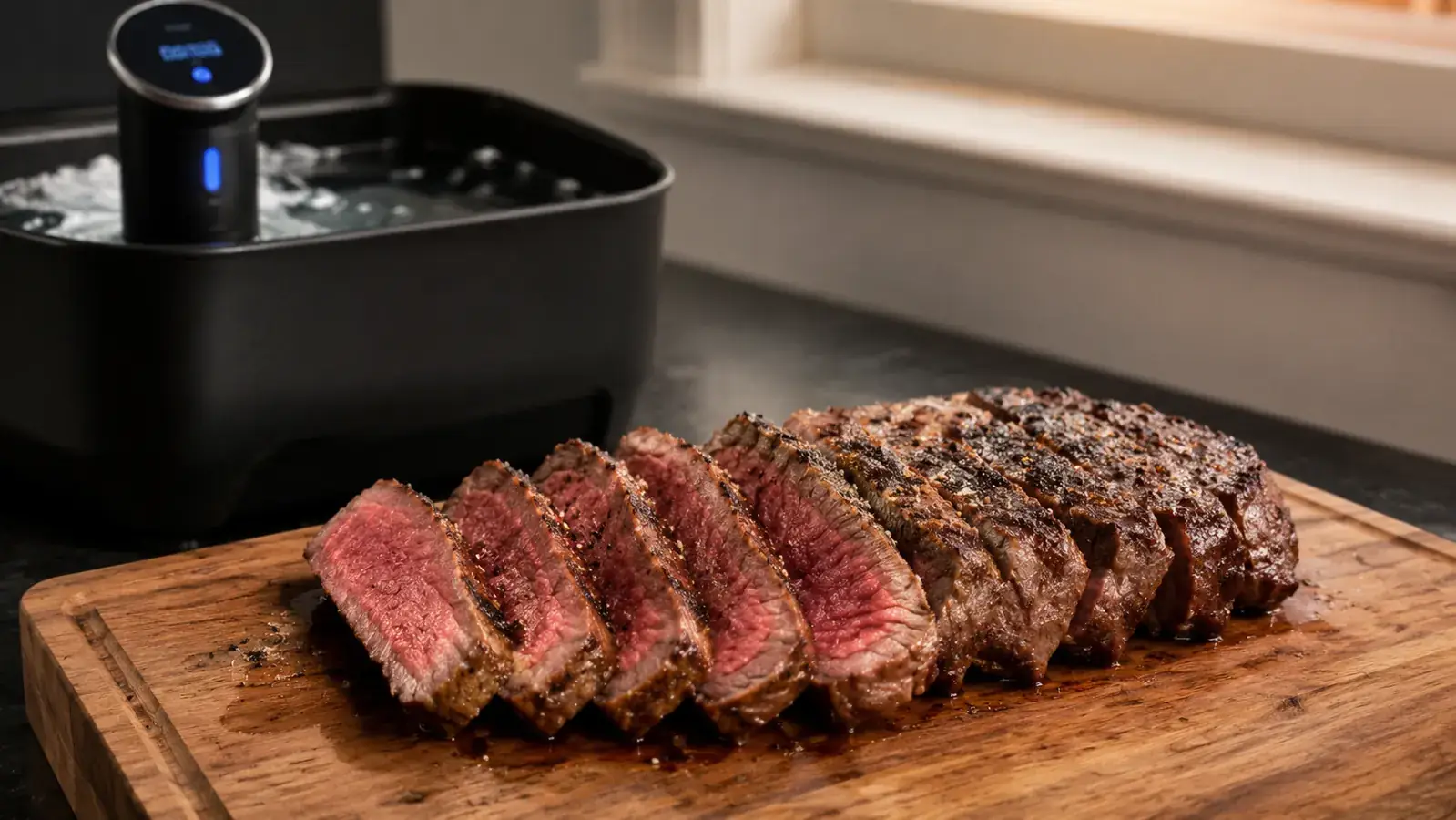
Steak is where this machine changed my kitchen the most. I run ribeye and strip steaks at 131 degrees Fahrenheit for 90 minutes to two hours, then finish in a screaming-hot cast iron pan for 45 seconds a side. Edge-to-edge medium-rare, every time, whether I'm cooking for two or feeding six people who all want theirs slightly different, since the bath doesn't care how many bags share the water.
Chicken thighs at 165 degrees for an hour and a half turned into my go-to weeknight protein. Boneless, skin-off, they come out tender in a way that oven-roasted thighs from my own recipe testing rarely matched, and a quick sear in a hot skillet afterward gives them the color my family expects on the plate. I've made this cook probably 30 times this year and it's never once come out dry.
Eggs became my honest test of precision. At 167 degrees for 13 minutes you get a jammy yolk that's identical from egg to egg, batch to batch, which sounds small until you've tried to hit that exact texture with a stovetop pot six mornings in a row and failed three of them. That consistency is the entire argument for owning this machine, distilled into a dozen eggs.
Pork tenderloin at 140 degrees for an hour is the cook I recommend to anyone who's ever dried one out in the oven, which is nearly everyone I know. And a handful of times I've run salmon fillets at 122 degrees for 30 minutes, which converts even the picky eater in my house who normally pushes fish to the side of the plate untouched.
Where the Precision Cooker Has Held Up, and Where It Hasn't
The circulator motor itself has been flawless. No unusual noise, no drop in flow rate, no error codes. I run it hard enough that I half expected the impeller to start whining by month eight, the way a cheap blender does, and it simply hasn't happened. That reliability is the biggest reason I'm still recommending it a year later.
The clamp mechanism is the one part that's shown real wear. The rubber grip that locks onto the pot edge has gotten slightly less snug, and I've had two cooks where I noticed the unit had drifted an inch to one side over a long braise. It hasn't caused a failed cook, but I now double-check the clamp before I walk away for anything over four hours, which I didn't used to think about.
Descaling is the maintenance task people skip and shouldn't. My tap water runs moderately hard, and by month six I noticed the temperature was taking noticeably longer to reach target, a sign of mineral buildup on the heating element. A vinegar soak per Anova's own instructions fixed it completely, and I've now built quarterly descaling into my routine the same way I clean my stand mixer.
Best for Weeknights, Not for Chasing Restaurant Precision
I want to be honest about where this machine stops being magic. Sous vide doesn't build a crust, doesn't caramelize, and doesn't replace a hot pan or a grill. Every single cook I've done still needed a finishing sear, and if you're not willing to do that second step, you'll end up with gray, unappetizing meat regardless of how precise the internal temperature was. The circulator gets you 80 percent of the way, the stove finishes the job.
It's also genuinely slow for weeknight spontaneity. A 90-minute steak cook means you're planning dinner by mid-afternoon, not deciding at 6pm what to make. I learned to batch cook proteins on Sunday and reheat portions through the week in the same bath rather than starting from scratch every night, which solved the timing problem but took a few months of trial and error to figure out.
There's also a counter-space and noise consideration that doesn't show up on a spec sheet. A full stockpot bath takes up real real estate for hours at a time, and the circulator hums at a low but constant pitch that my husband noticed before I did. Neither is a dealbreaker in my kitchen, but if you cook in a small apartment galley, it's worth planning where the pot lives during a long cook.
Alternatives I Considered Before Buying
I looked hard at the Inkbird circulator before landing on the Anova, mostly because it was the cheaper option and several testers I trust use one. What ultimately tipped me toward the Anova was the WiFi reliability and the wattage. At 1000 watts, my bath reaches temperature faster on cold winter tap water, which matters more than I expected once I was actually cooking on a schedule.
I also briefly considered a countertop multi-cooker with a built-in sous vide function, the kind that does five jobs adequately instead of one job extremely well. For anyone tight on counter space that's a reasonable compromise, but in my testing those units never held temperature as tightly as a dedicated immersion circulator, and precision is the entire point of owning one of these in the first place.
I nearly went with a used circulator from a neighbor who'd upgraded, but the seal on hers had already started leaking after a couple of years, and I decided a fresh unit with a full warranty was worth more to me than saving a bit of money on something that touches raw meat and runs unattended for hours at a time.
What I Liked
- Holds water temperature within about a degree, cook after cook
- 1000-watt motor heats a full stockpot faster than lower-wattage competitors
- Circulator has run a full year of near-daily use with zero mechanical issues
- App is genuinely optional, the physical controls work fine on their own
- Clip fits most stockpots and containers without extra hardware
Where It Falls Short
- Clamp grip has loosened slightly after a year of regular use
- Requires quarterly descaling if your tap water is moderately hard or harder
- Still needs a hot pan or grill finish, it won't build a crust on its own
- Long cook times mean real planning, not spontaneous weeknight decisions
- App recipe library leans heavily on Anova's own house recipes over broader variety
The circulator itself has been flawless for a year of near-daily use. The one part that's actually worn down is the clamp, not the motor, and that told me everything about where this machine's real value sits.
Who This Is For
This is for the home cook who's tired of gray-edged steak, who meal-preps proteins for the week, or who wants restaurant-consistent eggs without babysitting a pot. If you already own a stockpot and a container with a lid, the barrier to entry is low, and the payoff shows up on the very first cook. It's also a strong fit if you cook for a family with different doneness preferences, since a shared water bath solves that argument entirely.
It's also the right pick if you're the one in your house who ends up cooking for everyone's schedule at once, since a shared bath doesn't force you to choose one doneness for the whole table. I've fed picky teenagers and a rare-meat-loving father-in-law from the same pot on the same night without a single complaint.
Who Should Skip It
If you want dinner on the table in 20 minutes on a weeknight without planning ahead, this isn't your tool, at least not without the batch-cooking workaround I eventually landed on. And if you're not willing to finish every cook with a real sear in a hot pan, you'll end up disappointed by texture no matter how dialed in the internal temperature is. Precision without a finishing step is only half the recipe.
A year of steak, chicken, and eggs later, I still reach for it weekly.
If gray edges and dry chicken thighs are the reason you've been circling a sous vide circulator, the Anova Precision Cooker 2.0 is the one I'd tell a friend across my kitchen island to actually buy.
Amazon Check Today's Price on Amazon →