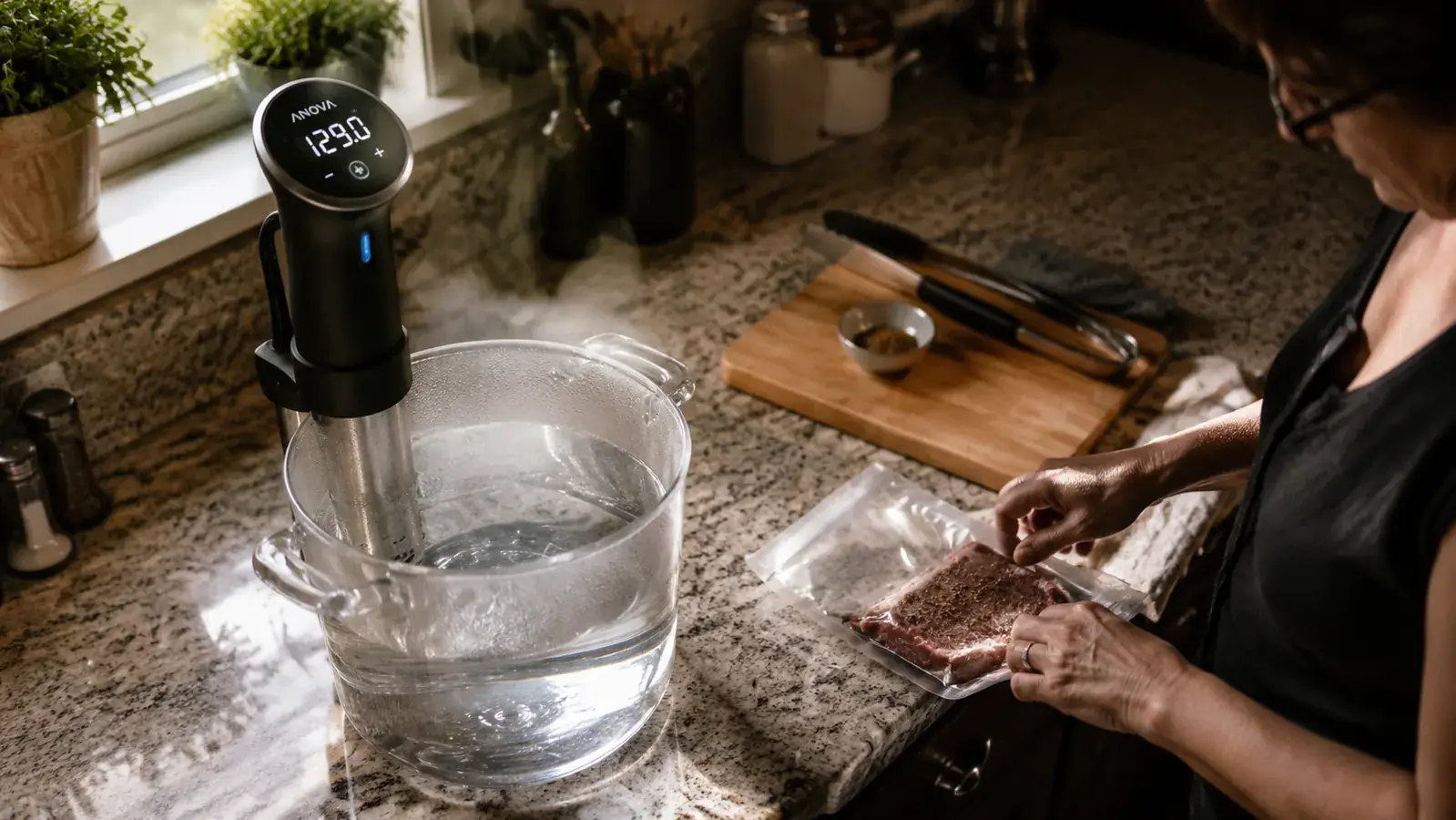
I've owned three different sous vide setups in the last decade, and two of them are in a donation box in my garage. The Anova is the one that's still clipped to a stockpot in my cabinet, because it's the only one I trust enough to walk away from while it's running. Sous vide sounds like a restaurant word, but the whole point of the method is embarrassingly simple: you seal food in a bag, drop it in a water bath held at an exact temperature, and let the water do what your stovetop never quite manages, which is cook the whole piece of meat to the same doneness at the same time.
I was skeptical for years. I'd tested immersion circulators before that overheated, underheated, or just quietly gave up mid-cook and left me with lukewarm chicken and a ruined Tuesday. The Anova changed my mind because it holds its number, every time, without me hovering over it, and because it did that on the very first steak I tried, not just on a good day. Here are the ten reasons this method earned a permanent spot on my counter instead of a shelf in the garage.
The gadget that finally stopped my Tuesday-night guessing game
If you've ever pulled a chicken breast off the stove wondering whether the middle is actually done, this is the fix. The Anova Precision Cooker holds water within a fraction of a degree, so the guessing stops.
Amazon Check Today's Price on Amazon →The temperature you set is the temperature you get
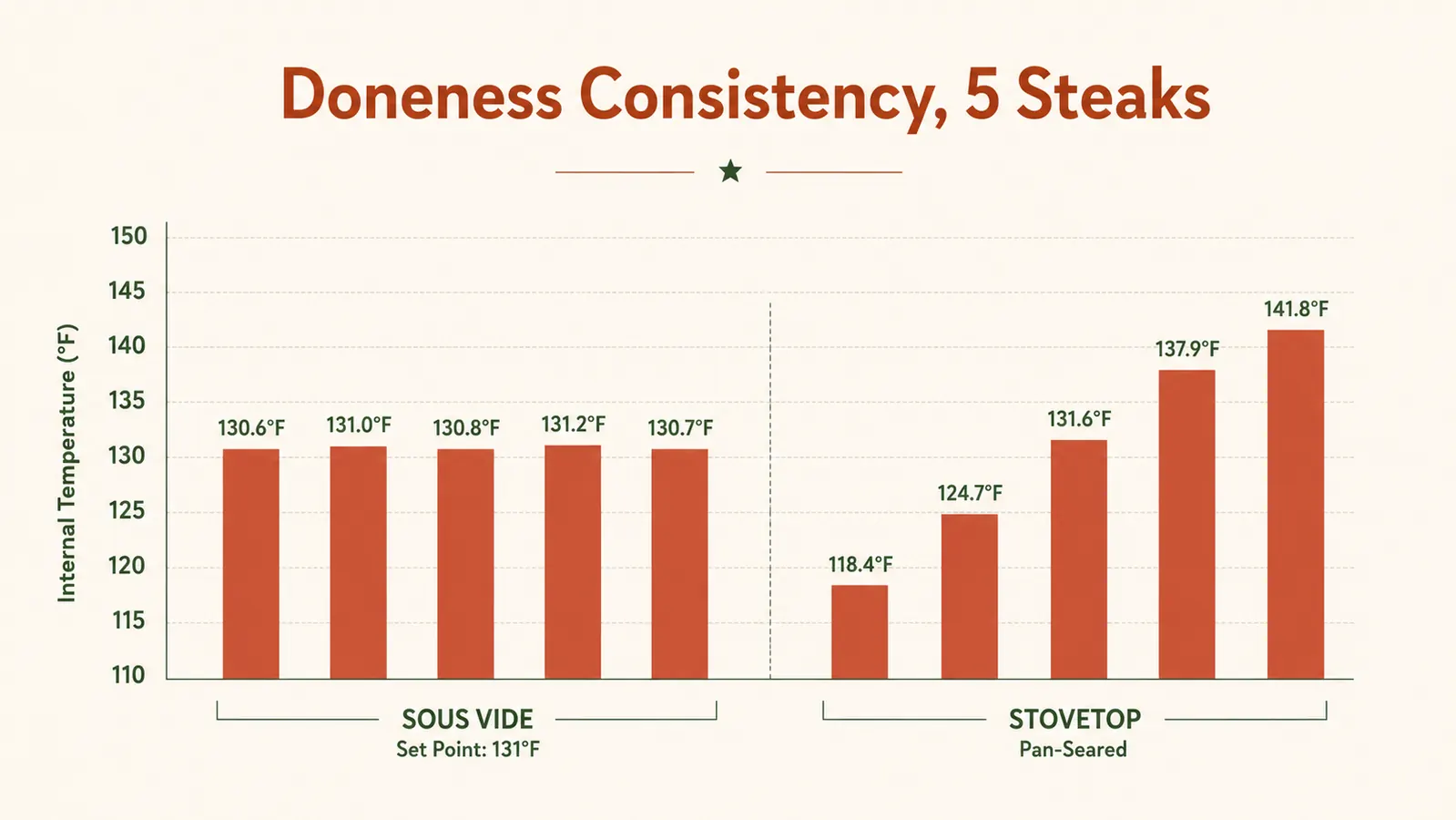
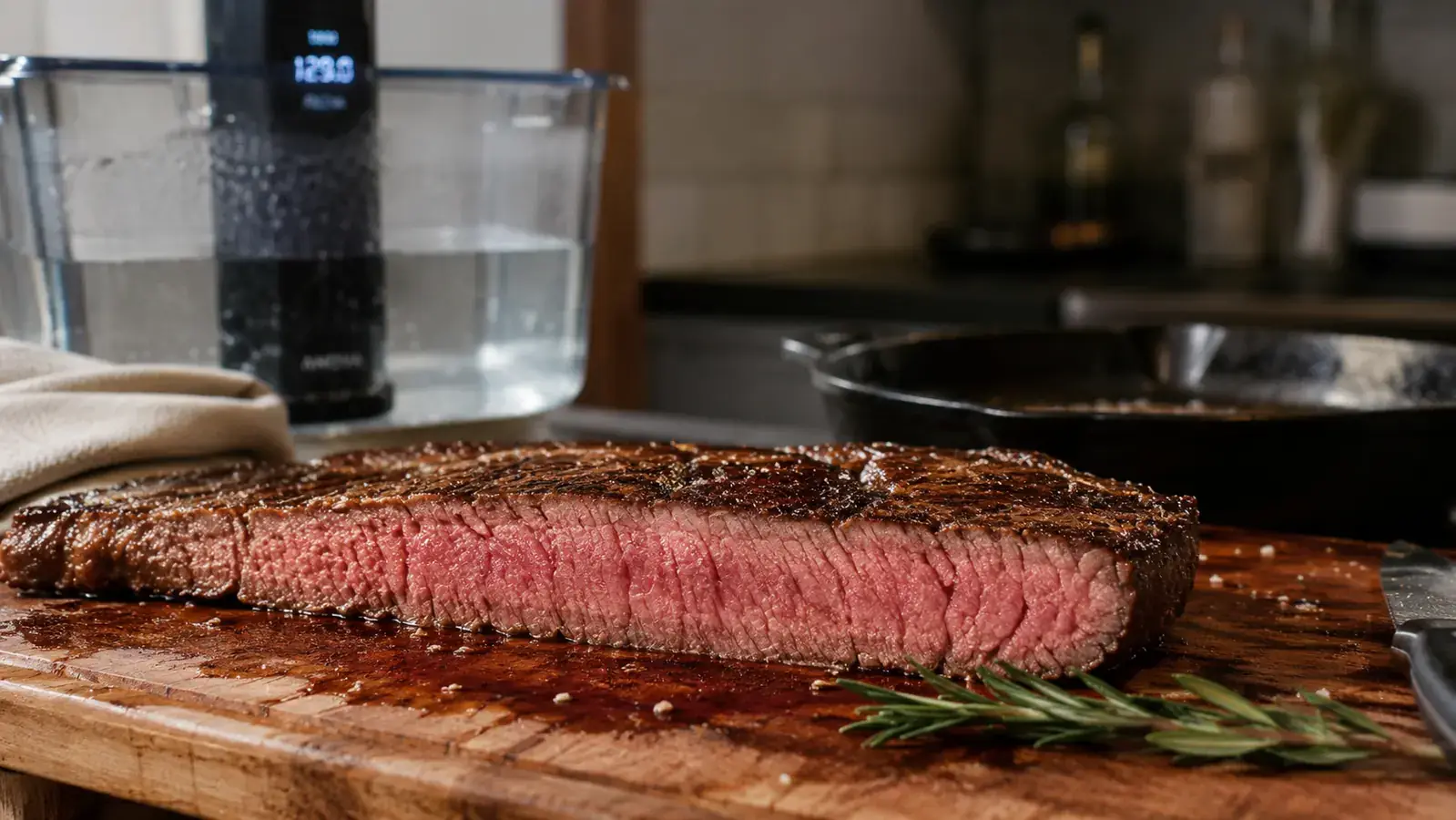
A stovetop pan swings ten or fifteen degrees depending on how recently you touched the burner knob. My Anova holds within about a tenth of a degree of whatever I set it to, which sounds like overkill until you realize that's the actual difference between medium-rare and medium on a steak. I set it to 131F for a ribeye and it sits at 131F for two hours straight, no adjusting, no checking, no second-guessing myself halfway through dinner prep.
No more grey band around the edges
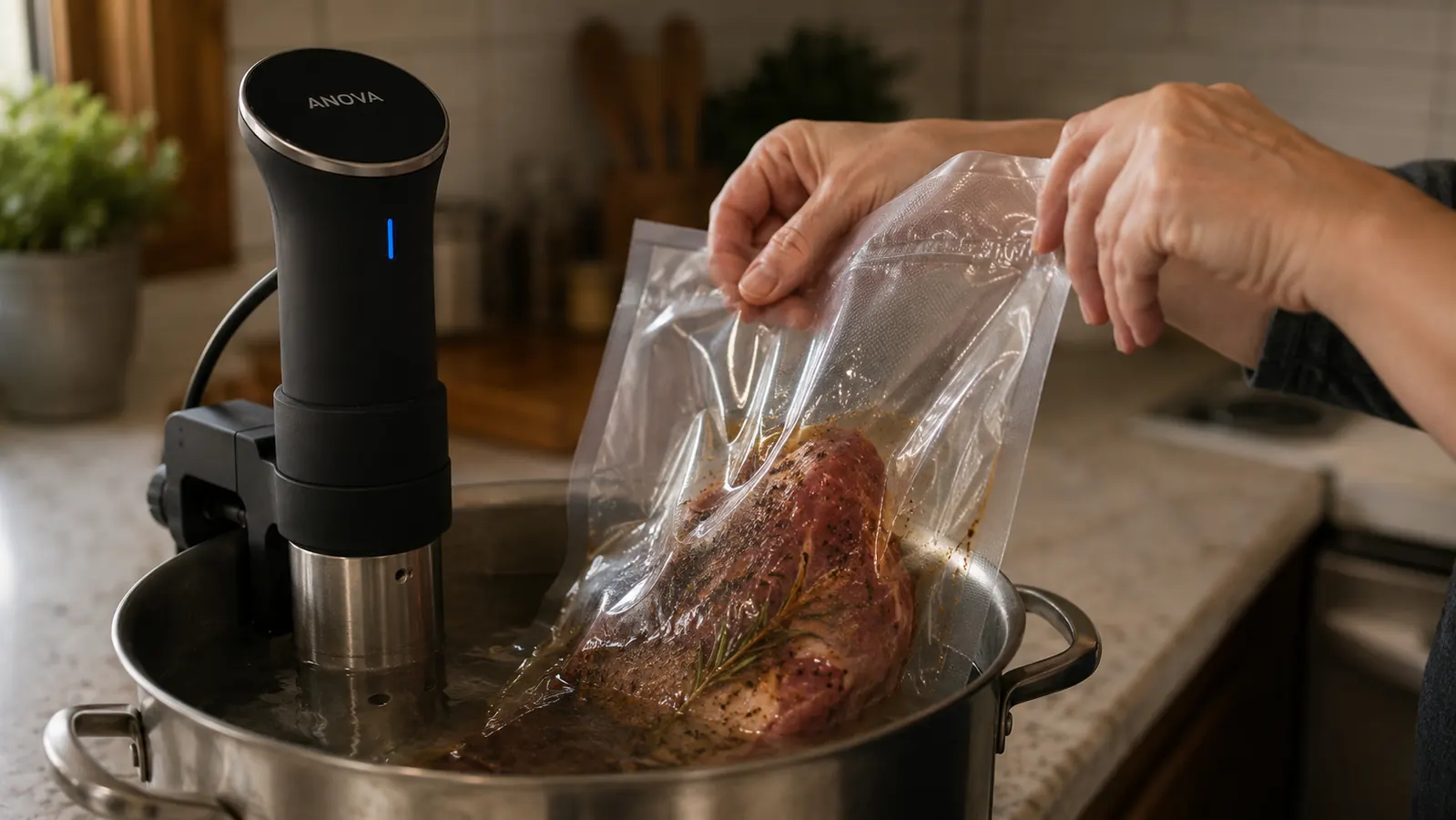
Every pan-cooked steak has that ring of overcooked grey meat between the crust and the pink center. That band is just heat traveling faster than it should through a hot pan. In a water bath, the whole cut reaches the target temperature and stops there, so a sous vide steak is pink from edge to edge, then gets a fast sear at the end for the crust without cooking the interior any further.
It doesn't care if you're skilled
I've handed the Anova to my brother-in-law, who burns toast, and he produced a better steak than I did the first ten times I tried pan-searing solo. The skill required to get a perfect result with sous vide is basically zero. You're not developing a feel for anything, you're not poking meat to guess doneness. You're reading a number off an app and trusting the water to do the rest, and the water does not have a bad night the way a distracted cook does.
You can walk away from it
This is the one that actually changed my week nights. I clip the circulator to the pot, drop in a bag of chicken thighs, and go help my daughter with homework for forty minutes. Nothing burns, nothing dries out, nothing needs a check-in. Try that with a pan on a live burner and you'll come back to a smoke alarm instead of dinner.
Leftovers reheat without turning to rubber
Reheating a steak in the microwave is how you ruin a steak twice. I drop leftover sous vide chicken or steak back into a 130F bath for fifteen minutes and it comes out exactly like it did the first night, no dried-out edges, no rubbery texture. This alone has cut down how much food gets tossed in my house, since leftovers actually get eaten instead of quietly forgotten in the back of the fridge.
See what the Anova actually holds at 131F for two hours
That kind of hold is the whole reason this list exists. Check today's availability and price before your next Tuesday-night dinner scramble.
Amazon Check Today's Price on Amazon →Cheap, tough cuts turn into something worth serving
Chuck roast and pork shoulder used to mean a six-hour braise or nothing. Held at 135F to 140F for 24 to 36 hours, chuck roast comes out tender enough to slice like a ribeye, at a third of the price. My grocery bill noticed before my taste buds did, and it's changed which cuts I actually reach for at the meat counter.
Eggs finally cook the way you actually want them
I spent years failing to nail a soft, jammy egg on the stove, either too runny or already turning to rubber by the time I plated it. Sous vide eggs at 167F for 13 minutes come out the same custardy texture every single time, no timer panic, no cracked shells in boiling water, no ruined weekend brunch.
It holds food at serving temperature without overcooking it
Once food hits the target temperature, it stays there. That means I can cook a batch of chicken breasts for dinner, then leave two more in the bath for another twenty minutes while I finish the sides, and they don't overcook the way they would in a pan left on heat.
It frees up your stovetop and oven for everything else
On a night with a full dinner, my stovetop is usually fighting for space between a pot of rice and a pan of vegetables. The circulator runs quietly in its own pot on the counter, off to the side, doing the protein while the rest of the burners handle everything else. It's the one appliance that doesn't compete for real estate.
There's almost no window to ruin it
Pan-searing a steak has a sixty-second margin between perfect and overdone. Sous vide has a margin measured in hours, since the meat can't exceed the water temperature no matter how long it sits. That forgiveness is why I trust this method on nights I'm distracted, tired, or juggling three other pots at once.
What I'd Skip
I'm not going to pretend sous vide fixes everything, because it doesn't. Leafy vegetables and anything you want crisp, like green beans or asparagus, turn dull and a little mushy in a long water bath, so I still blanch or roast those the normal way. A whole turkey is also a poor fit unless you're portioning it first, since most home circulators and pots don't have the volume or the even flow for something that size. And if you're only ever cooking one plain hamburger for yourself on a random Wednesday, sous vide is more setup than the meal deserves, a hot skillet will get you there faster. Save the water bath for the cuts and proteins where precision actually pays off, and keep the pan for the quick, casual stuff.
I stopped timing steaks with a clock and started timing them with a number on an app, and I have not ruined one since.
Ready to stop guessing at doneness for good
The Anova Precision Cooker is the tool that made these ten reasons real in my own kitchen, not a marketing sheet. If a Tuesday-night chicken breast or a Saturday steak dinner has ever come out overcooked on your watch, this is the fix worth trying.
Amazon Check Today's Price on Amazon →