
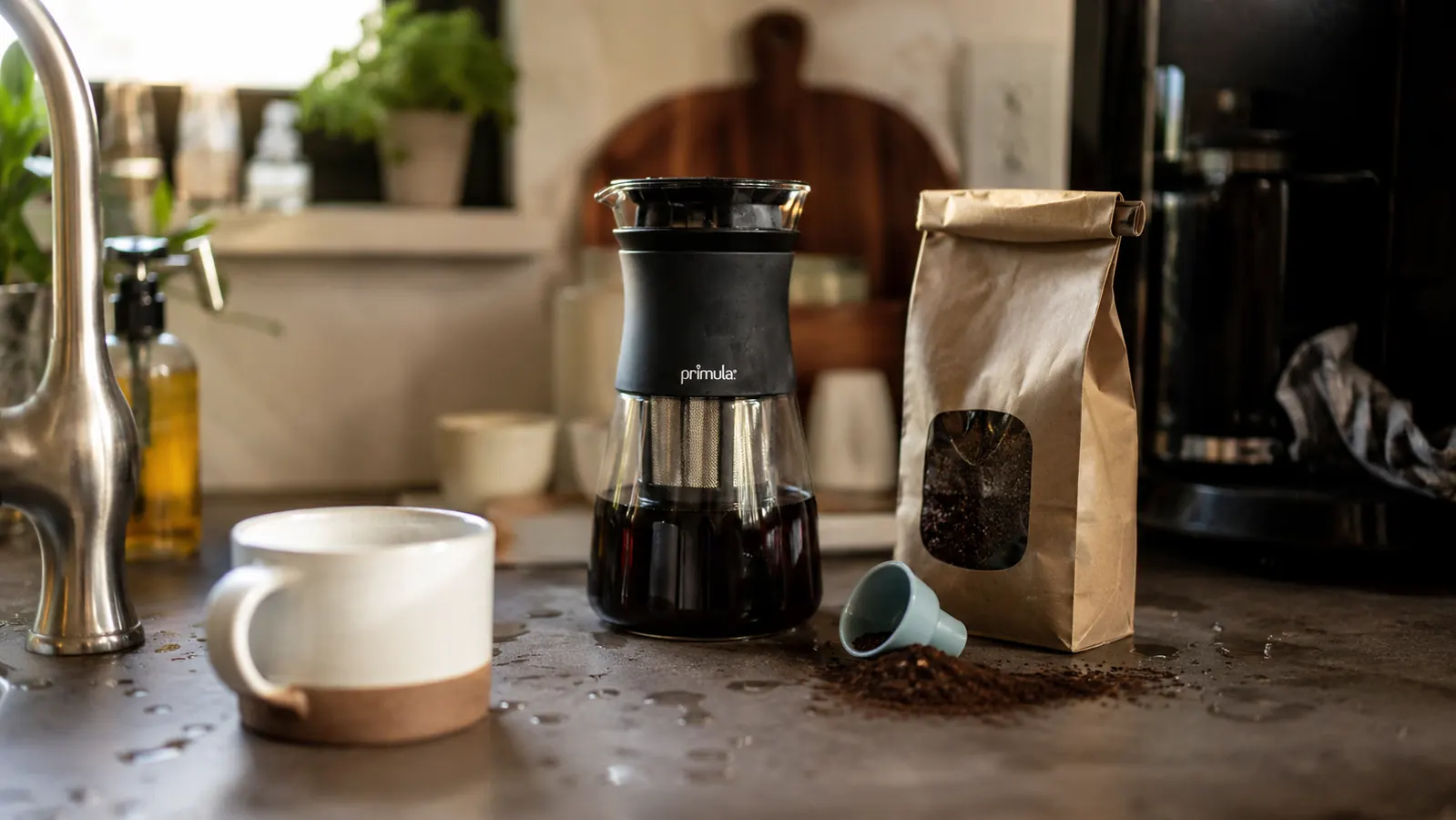
Nobody tells you that a Primula cold brew maker takes up more fridge real estate than the box makes it look like it will, and that's the first thing I wish someone had said to me before I bought the Burke Deluxe back in March. I'd read four glowing reviews before checking out, and every single one skipped straight to how good the coffee tastes without mentioning the part where I had to move my egg carton to a different shelf permanently. That's a small complaint, sure, but it's the kind of thing you only find out by living with a gadget, not by reading a spec sheet.
I've been testing kitchen gear for other people for twenty years now, mostly because I got tired of buying things that looked good in photos and died in a drawer within a month. So when I finally caved on a dedicated cold brew maker after years of cheesecloth and mason jars, I went in expecting to find the catch. There's always a catch. This review is the one I actually wanted to read before I handed over my card, the stuff that doesn't make it into the five-star Amazon reviews because people are too busy being happy about the coffee to mention the annoying bits.
The Quick Verdict
Genuinely good cold brew for the effort, but the fridge footprint and the fill-line guesswork are real annoyances nobody warns you about upfront.
Amazon Check Today's Price →Everyone Reviews the Coffee. Nobody Reviews the Fridge Space. Here's the Honest Version.
The Primula Burke Deluxe makes a genuinely good batch, but there are a few things I wish I'd known before it took over a whole fridge shelf.
Amazon Check Today's Price on Amazon →How I Actually Tested It, Not the Marketing Version
I didn't do a polite week-long test and call it a review. I used this thing the way I actually drink coffee, which is inconsistently, some weeks every single day, other weeks skipped entirely because I'm traveling for a food event or just drinking regular hot coffee because it's forty degrees out. Four months in, that inconsistency turned out to matter, because it's exactly the pattern that exposes the parts a tidy one-week test would miss, like what happens to the concentrate when you forget about it in the back of the fridge for nine days.
My first batch, I'll admit, I underfilled the mesh basket because the fill lines on the packaging photo didn't match what I saw once I had the actual carafe in front of me. Nobody mentions this. The instructions say a heaping amount of coarse grounds, but heaping according to who? I ended up brewing a weak, watery batch that first week and nearly wrote the whole thing off before I figured out my own ratio through trial and error, which took closer to three attempts than the one clean shot the marketing photos imply.
I also deliberately skipped the recommended cleaning schedule for two straight weeks in month two, just to see what would actually happen if I got lazy about it the way most people eventually do with any kitchen gadget. It held up better than I expected. The mesh didn't warp, and a slightly delayed rinse didn't ruin the next batch, but the smell problem I mention below got noticeably worse during that stretch, which told me the real-world tolerance for skipping steps is lower than I'd hoped.
The Smell Nobody Warns You About
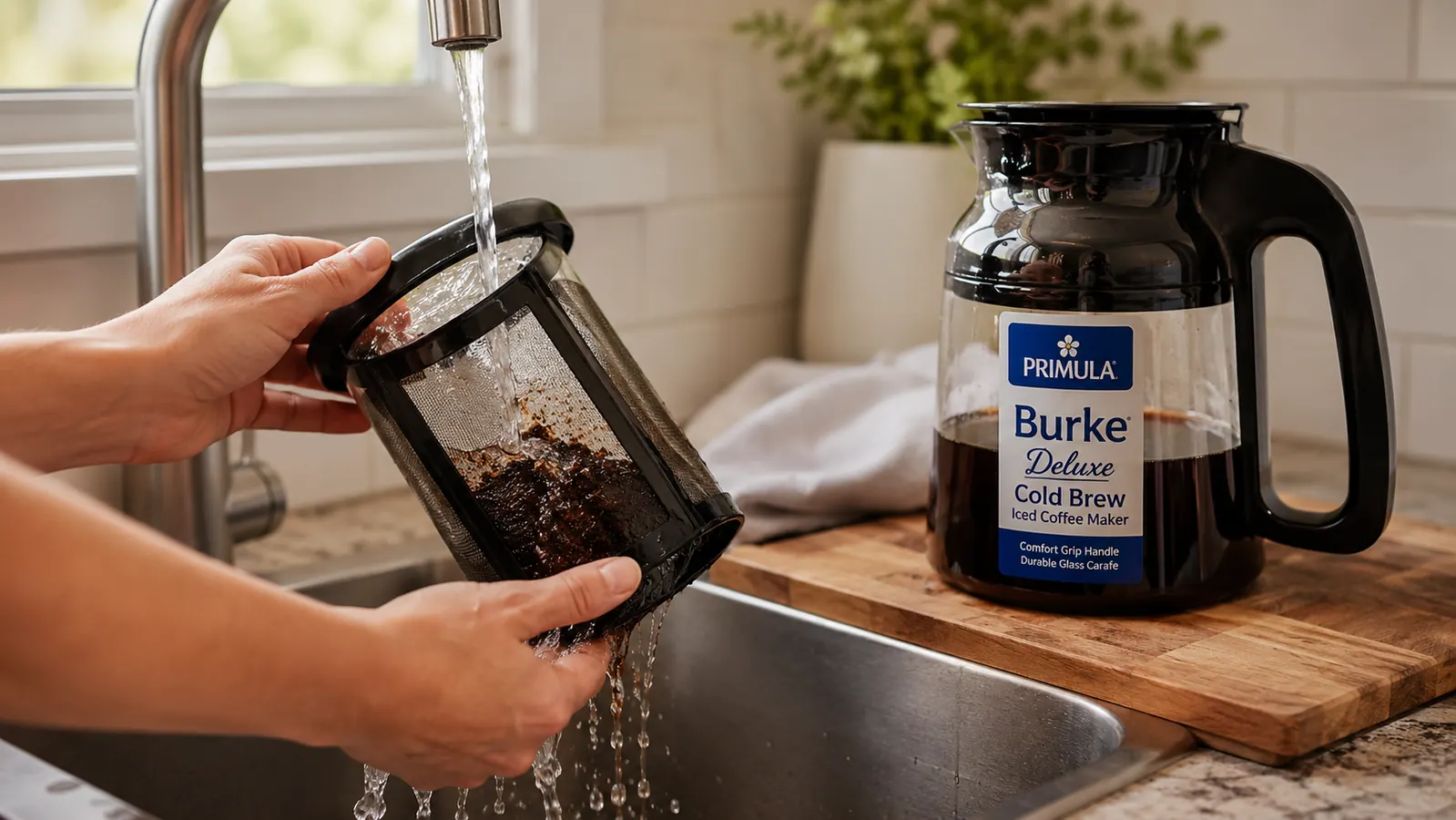
Here's something that surprised me and that I have never once seen mentioned in another review of this maker: wet coffee grounds sitting in a mesh filter basket, even briefly, start to smell sour faster than you'd expect. If I rinse the basket right after pulling it out of the fridge, no issue. If it sits in my sink for even twenty minutes while I deal with the rest of breakfast, my kitchen starts smelling like the bottom of a gas station coffee pot. It's not a dealbreaker, but it changed my morning order of operations. I now rinse the filter before I do anything else, coffee or otherwise, because letting it wait is genuinely unpleasant.
It's a small thing, but it's the kind of detail that only shows up after you've lived with a product for a while, not after a single test batch. I mention it here because I went looking for this exact complaint online before I bought mine and couldn't find a single person who'd flagged it, which made me wonder if I'd gotten a defective unit. I hadn't. It's just what wet used grounds do, and the mesh basket design means there's more surface area exposed to air than a paper filter you'd toss immediately.
The Fridge Math Nobody Does For You
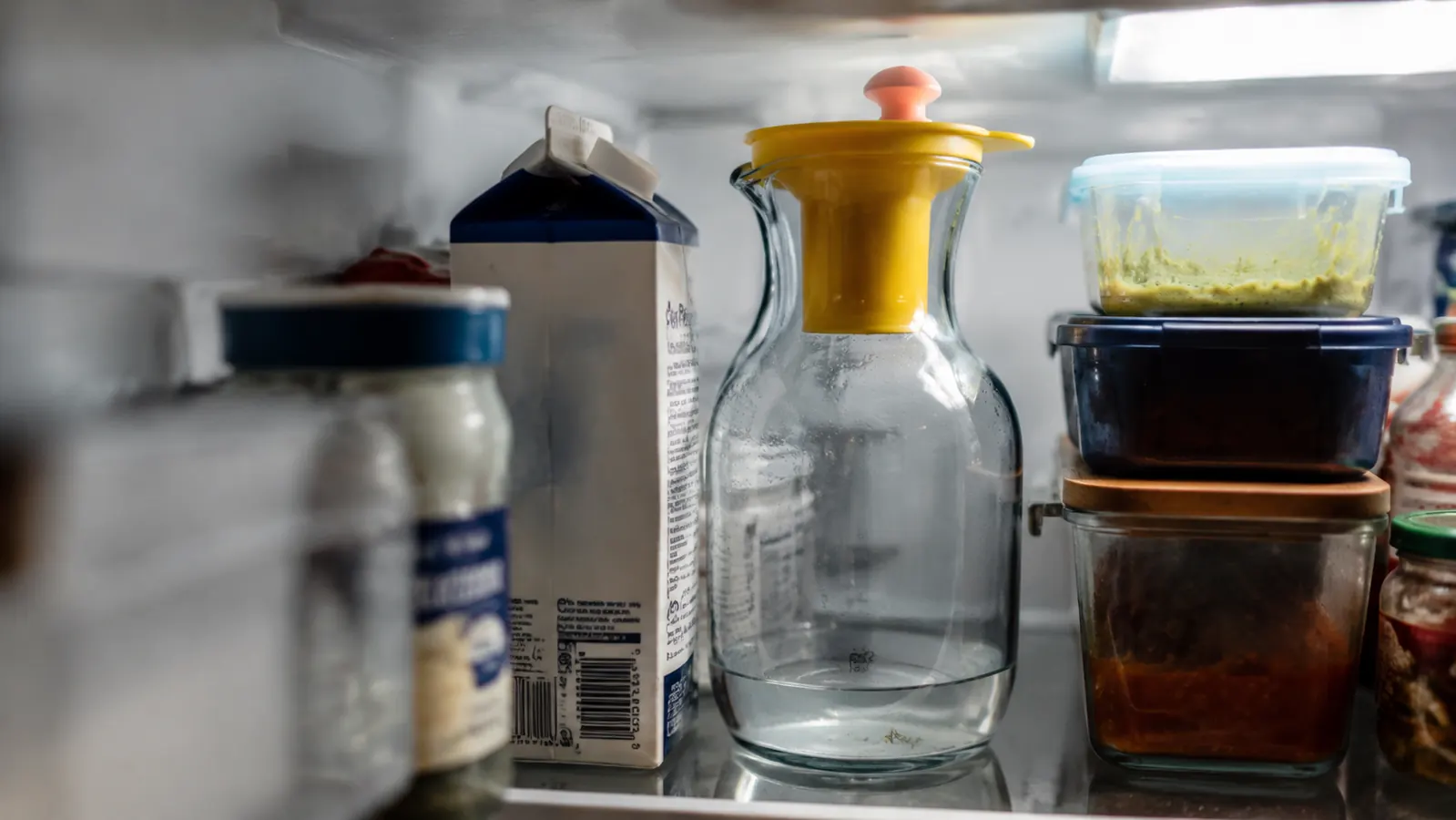
The 1.6-quart glass carafe sounds modest until you actually try to fit it in a normal fridge shelf next to everything else you already keep in there. I have a mid-size fridge, nothing unusual, and I had to permanently rearrange my top shelf to make room. If you're the kind of household that keeps a fridge packed door to door, do yourself a favor and measure your actual shelf clearance before ordering, because the carafe is taller and wider than most standard pitchers, and the handle sticks out at an angle that eats even more width than the glass itself.
I also learned that a full carafe with ice inside it clinks loudly enough to be genuinely startling if you open the fridge door too fast in a quiet house at 5 a.m. That sounds like a joke, but my husband has complained about it twice, and now I open that door slower than I open any other one in my kitchen. Again, not something that shows up in a spec sheet, but it's real.
What Actually Surprised Me About the Flavor
I expected the cold brew to taste fine and was braced for it to taste like every other home cold brew I've made, which is to say slightly thin compared to what you'd get at a coffee shop. That's not what happened. What actually surprised me is how much the flavor depended on grind size, more than any other cold brew method I've used, including the mason jar setup. A slightly-too-fine grind, the kind you might not even notice with a drip machine, turns this into a cloudier, more bitter batch here. I had to go back to my local roaster and specifically ask for a coarser cold brew grind, which I hadn't needed to do with my old cheesecloth method because I was less picky about ratios back then.
Once I dialed that in, the payoff was real. The concentrate came out noticeably smoother than the coffee shop version I used to buy three or four times a week, with none of the sharp acidity that makes some iced coffee hard on an empty stomach. That part of the marketing claims actually holds up, which honestly surprised me given how skeptical I went in.
The Price Question Nobody Answers Honestly
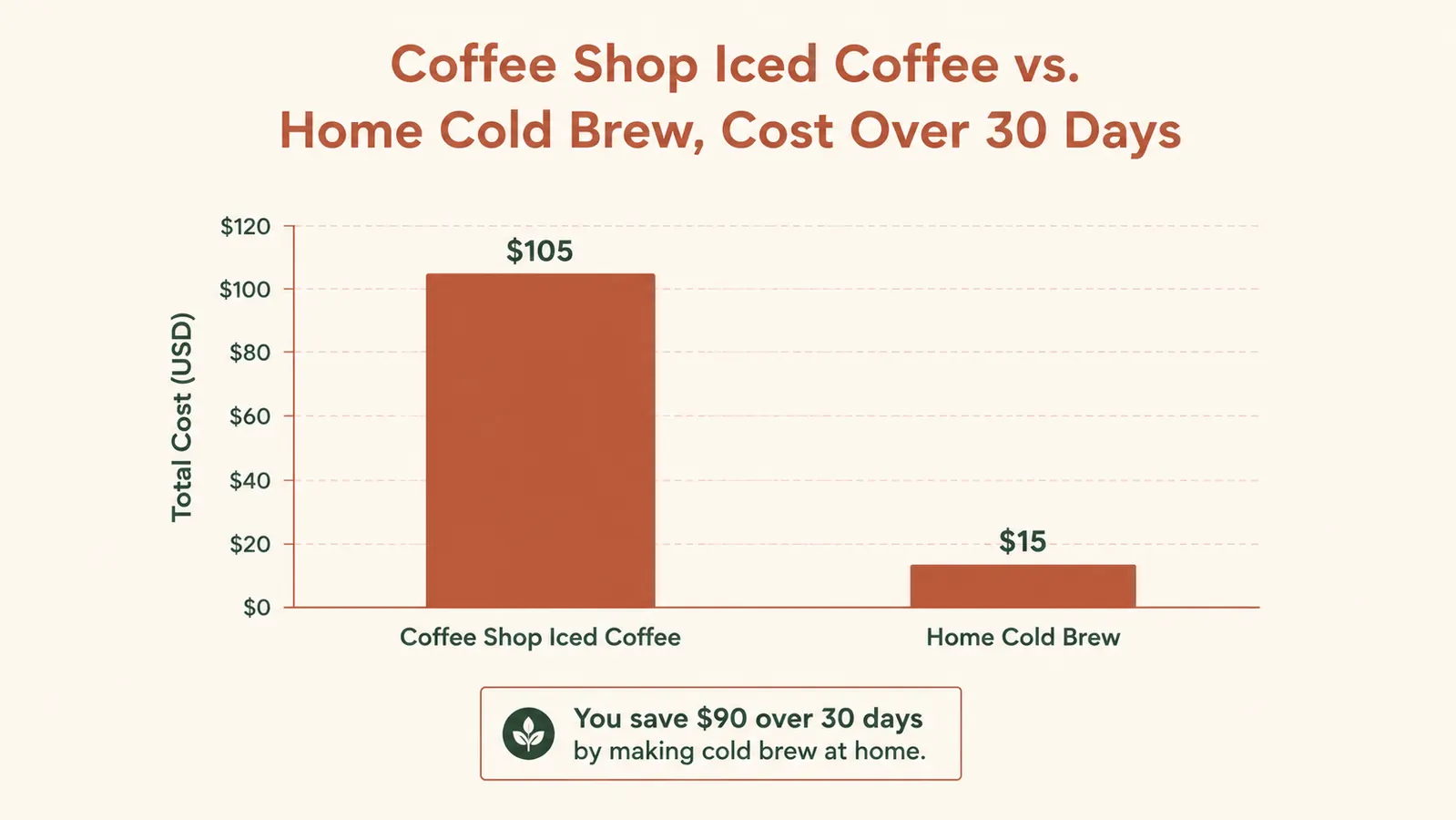
Every review I read before buying mentioned that this pays for itself compared to a coffee shop habit, and that's technically true, but the honest version of that math takes longer to play out than the reviews imply. You still need to buy whole beans regularly, and if you're buying good beans instead of the cheapest bag on the shelf, the savings shrink faster than the headline claim suggests. It's real savings, don't get me wrong, but it's not the dramatic overnight win some reviews make it sound like. It's a slow, steady savings that shows up over a couple of months, not a couple of weeks.
What nobody mentions is the hidden cost of switching beans as often as I ended up doing while I was dialing in my grind size. I went through three different bags before I found the coarseness that worked, and two of those were wasted because I'd already ground them too fine for this specific method. That's a cost of learning curve, not a cost of the product itself, but it's real money that the glowing five-star reviews conveniently skip.
Where This Falls Short of the Hype
I want to be fair here because I do actually like this maker, but there are legitimate shortfalls. The lid's pour spout is a nice idea in theory and a mixed bag in practice. It works fine if you pour at a careful, deliberate angle, but rush it even slightly and you get a thin trickle running down the outside of the glass onto whatever shelf it's sitting on. I've had to wipe up more sticky coffee drips from my counter than I expected for a maker with a supposedly built-in pour solution.
The other honest shortfall is that this is not a fast method, and if you're the kind of person who wants iced coffee on demand without planning ahead, this will frustrate you. You cannot decide at 7 a.m. that you want cold brew today. You needed to have started it the night before, and if you forget, which I have more than once, you're back to your old method or a coffee shop run, at least for that day.
There's also a texture issue nobody flagged for me ahead of time. Because the mesh is finer than a typical French press screen but coarser than a paper filter, you get a faint, almost silty residue at the very bottom of a poured glass if you drink all the way down without cutting it earlier with ice or milk. It's not gritty exactly, more like the difference between filtered and unfiltered apple cider, and it only shows up in the last inch of the glass, but I noticed it every time once I knew to look for it.
What I Tried Instead, Before Sticking With This
Before landing on the Primula, I tried a no-frills cold brew bag system, the kind that looks like an oversized tea bag you steep directly in a pitcher of water. It's cheaper and takes up almost no extra space, but the flavor consistency was worse batch to batch, and I found myself second-guessing steep times without a proper filter basket to work with. It's a reasonable option if you're not sure you'll stick with cold brew long term and don't want to commit to a dedicated carafe taking over your fridge.
I also seriously considered just sticking with my old cheesecloth-over-a-mason-jar setup, since it cost me nothing extra and I already owned everything I needed. What pushed me toward buying a dedicated maker instead was purely the cleanup, straining coffee through cheesecloth over a sink is messier and slower than pulling a filter basket straight out and rinsing it, and that daily friction eventually wore me down more than the price of a new gadget did.
The Cleaning Routine Nobody Actually Details
Most reviews say cleaning is easy and leave it there, which technically isn't wrong, but it skips the small habits that make it easy versus the ones that make it annoying. Rinsing the basket right away under warm running water takes maybe fifteen seconds and prevents almost everything I complained about above. Wait until the grounds have dried on the mesh, even overnight, and you're looking at actual scrubbing with a bottle brush to get them out of the fine weave, which is a completely different level of effort than the fifteen-second version.
The lid gets overlooked in most reviews too, and it shouldn't. The pour spout has a small internal channel that traps a surprising amount of concentrate if you don't tip it upside down and rinse it directly, and I found dried coffee residue building up in there after about three weeks of just wiping the outside. It's a fifteen-second fix once you know to do it, but nothing in the included instructions mentions it, and I only found it by accident while doing a deeper clean one Sunday.
What I Liked
- Flavor is genuinely smooth once you find the right grind size, better than I expected
- Filter basket pulls straight out for rinsing, far less messy than cheesecloth
- Concentrate holds its flavor for close to a week in the fridge
- Pour spout works well once you learn to pour slowly and at an angle
- Held up fine even when I got lazy with the cleaning schedule for two weeks straight
Where It Falls Short
- Takes up more fridge shelf space than the listing photos suggest
- Wet grounds in the filter basket start smelling sour if left sitting even briefly
- Grind size matters more here than with other cold brew methods, expect some trial and error
- Pour spout drips if you rush it
- Requires planning a full night ahead, no same-day option
- The lid's internal spout channel traps residue nobody mentions cleaning
Every review I read before buying skipped the smell, the fridge math, and the grind-size learning curve. Those are the parts that actually determine whether you'll still use this in month four.
Who This Is For
If you already drink iced coffee often enough that a coffee shop habit is draining your wallet, and you have the fridge space and the patience to plan a night ahead, this earns its keep. It's especially worth it if you're currently doing the cheesecloth-and-jar workaround and are tired of the mess, because the cleanup difference alone justifies the switch for a lot of people.
Who Should Skip It
Skip this if your fridge is already packed tight, or if you're someone who wants coffee on impulse rather than planning ahead the night before. Same goes if you're not willing to experiment with grind size, because a too-fine grind will genuinely disappoint you here in a way it might not with other methods. If you drink cold brew only occasionally, the fridge space this demands probably isn't worth it for a once-a-week habit.
The Honest Version: Good Coffee, A Few Real Annoyances, Still Worth It For Daily Drinkers
If you're ready to trade a coffee shop habit for a nightly two-minute routine, this is a solid pick, just go in knowing about the fridge space and the grind-size learning curve.
Amazon Check Today's Price on Amazon →